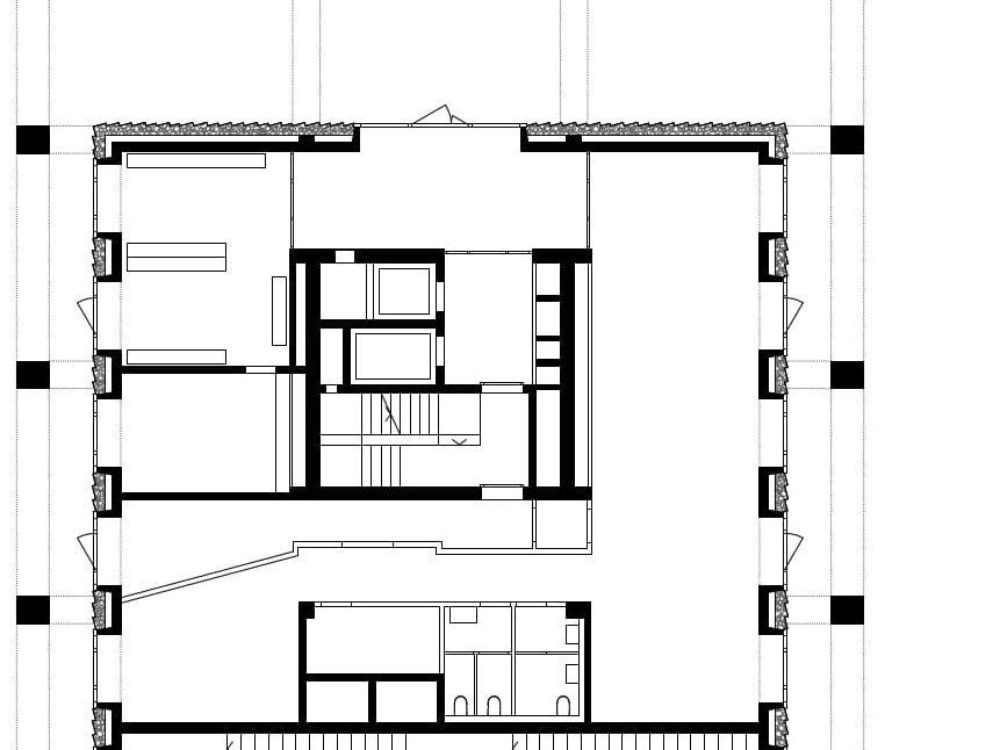
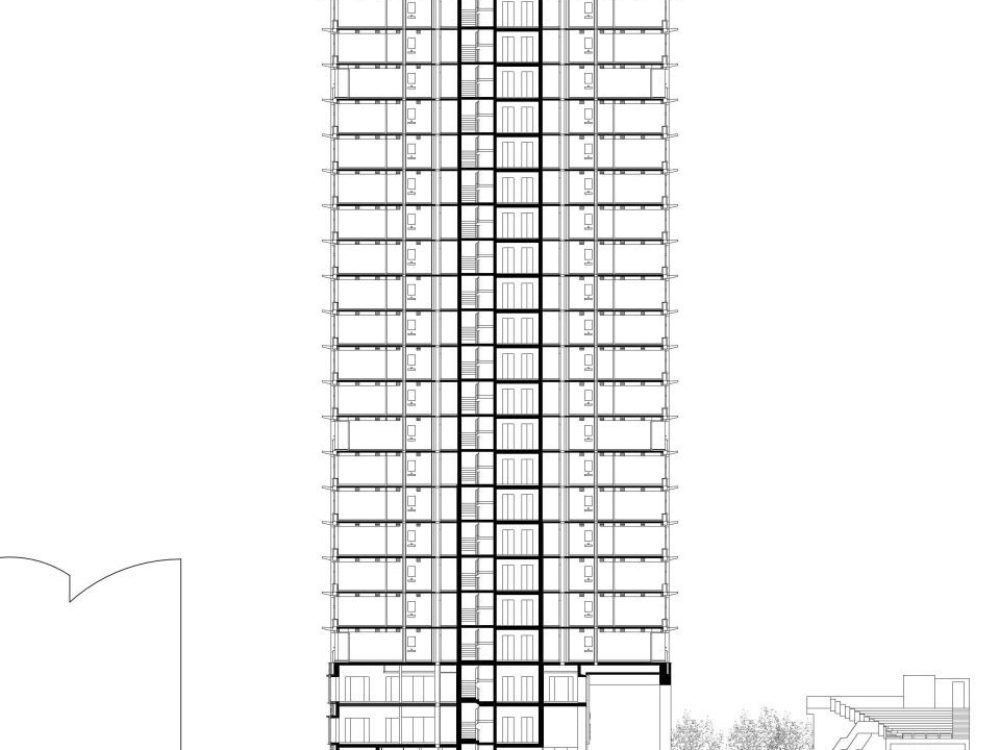
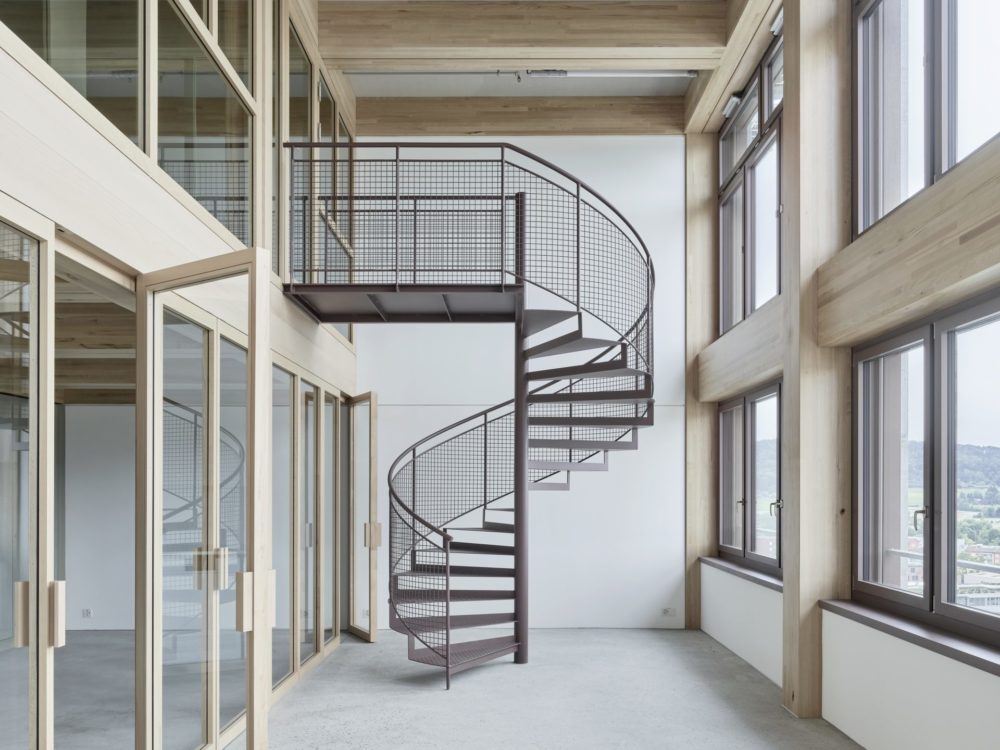
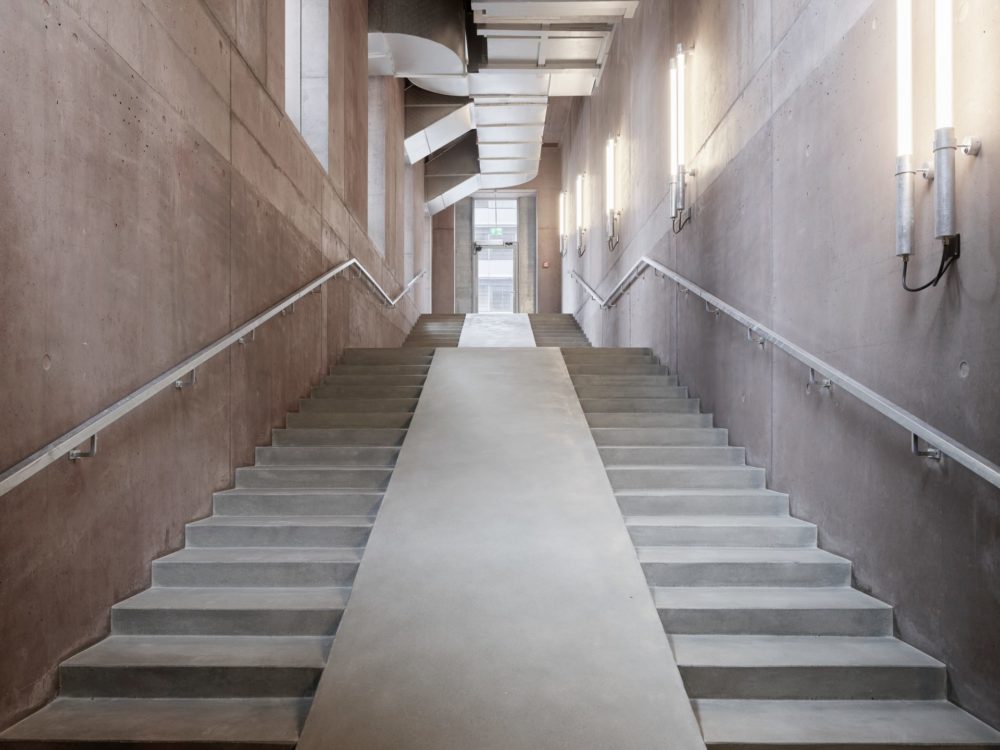
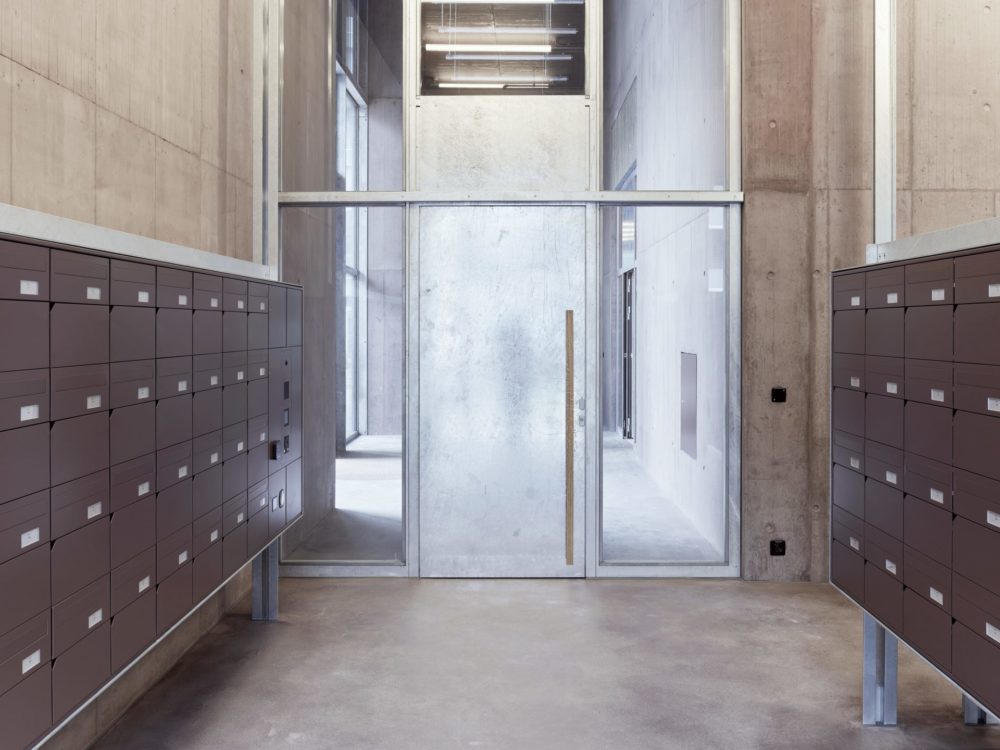
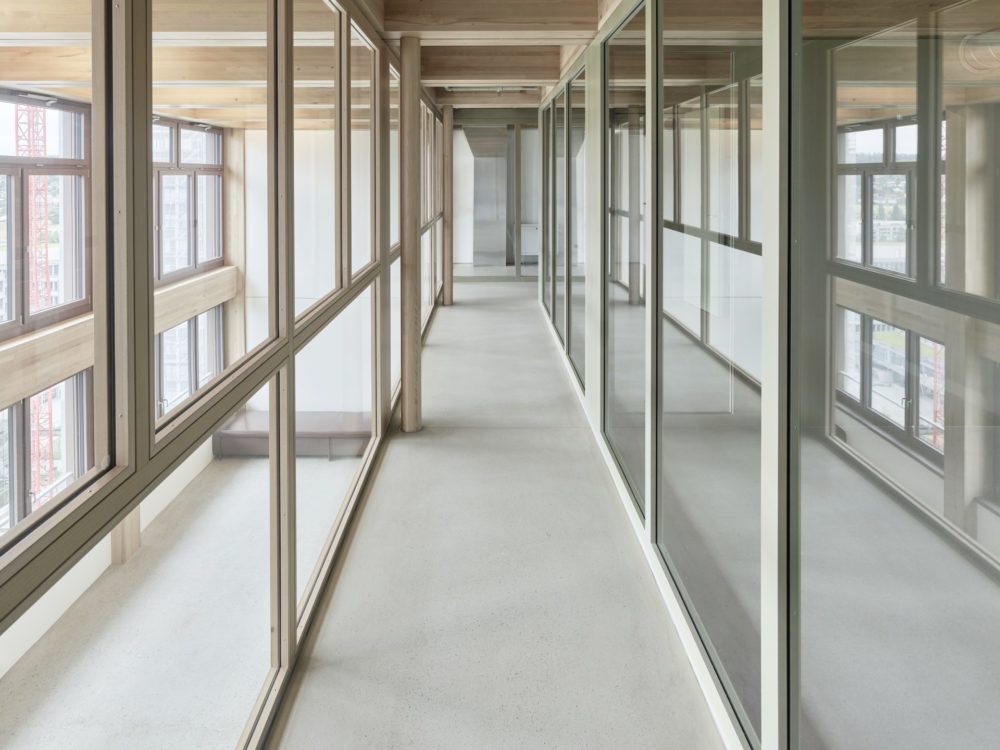
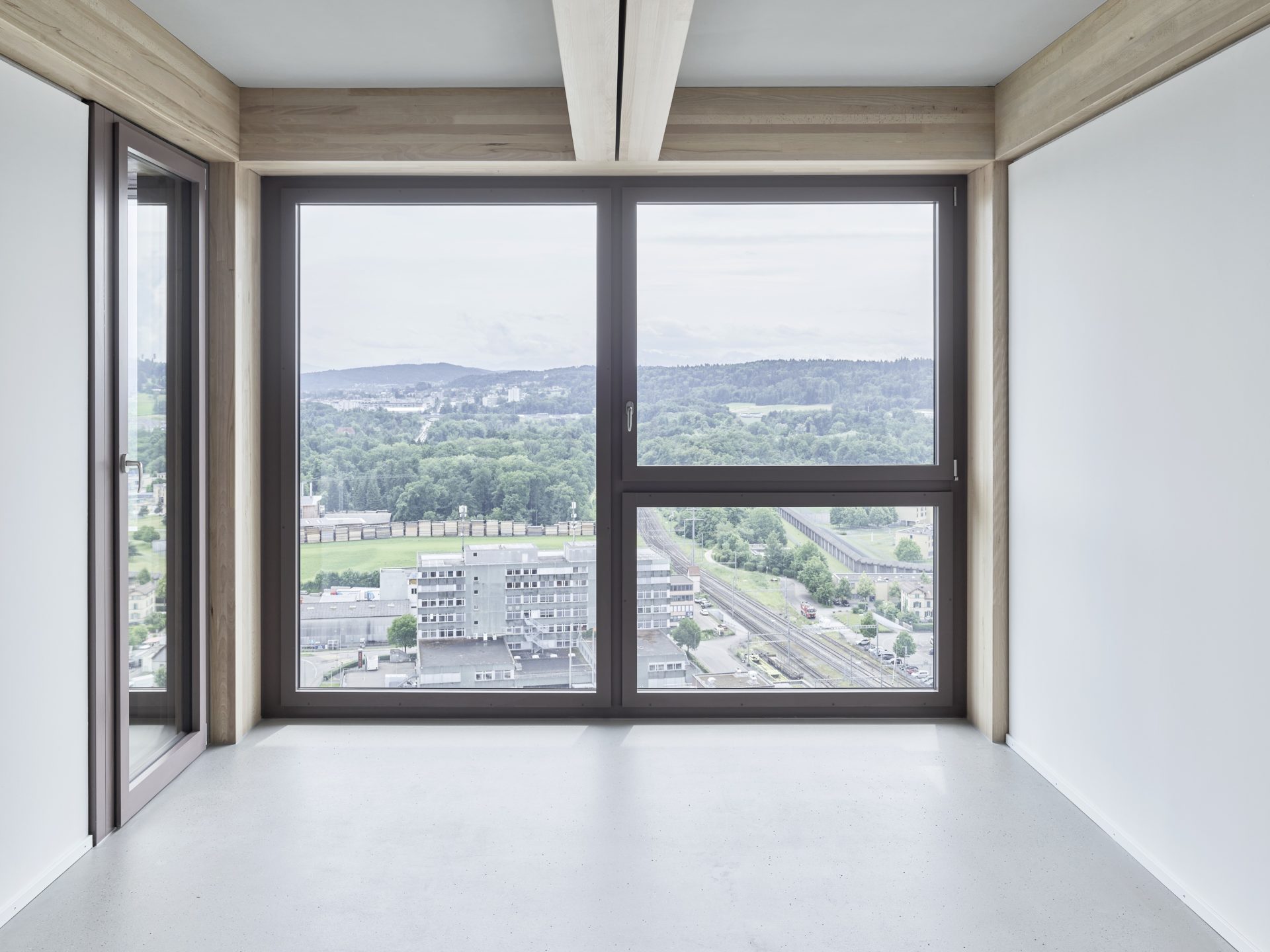
The 75-metre-high Hochhaus H1 combines a reinforced concrete core with a lightweight timber superstructure. The twenty-one residential floors above rely on a hybrid system: thin concrete slabs rest on a prefabricated timber skeleton of columns, beams, and exterior walls.
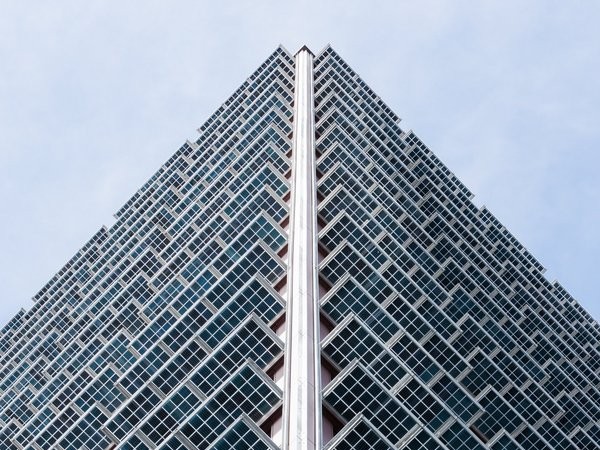
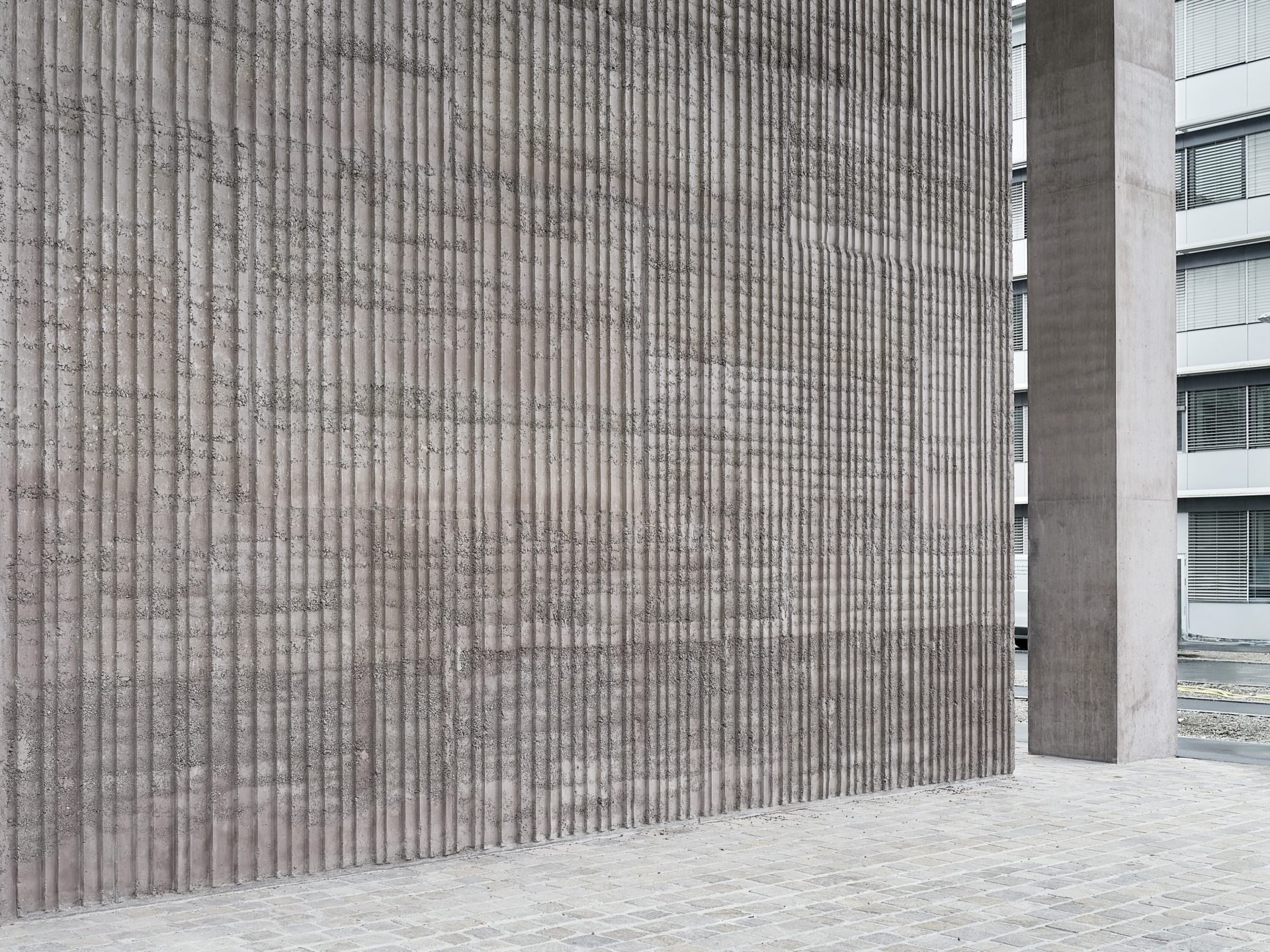
The solidly modelled base, supported by concrete pillars, forms the “table” on which the wooden structure stands — making the building’s load-bearing logic visibly legible and distinctive. The facade, rhythmically structured with reddish metal profiles, is animated by varied window divisions that reflect the organisation of the interiors.
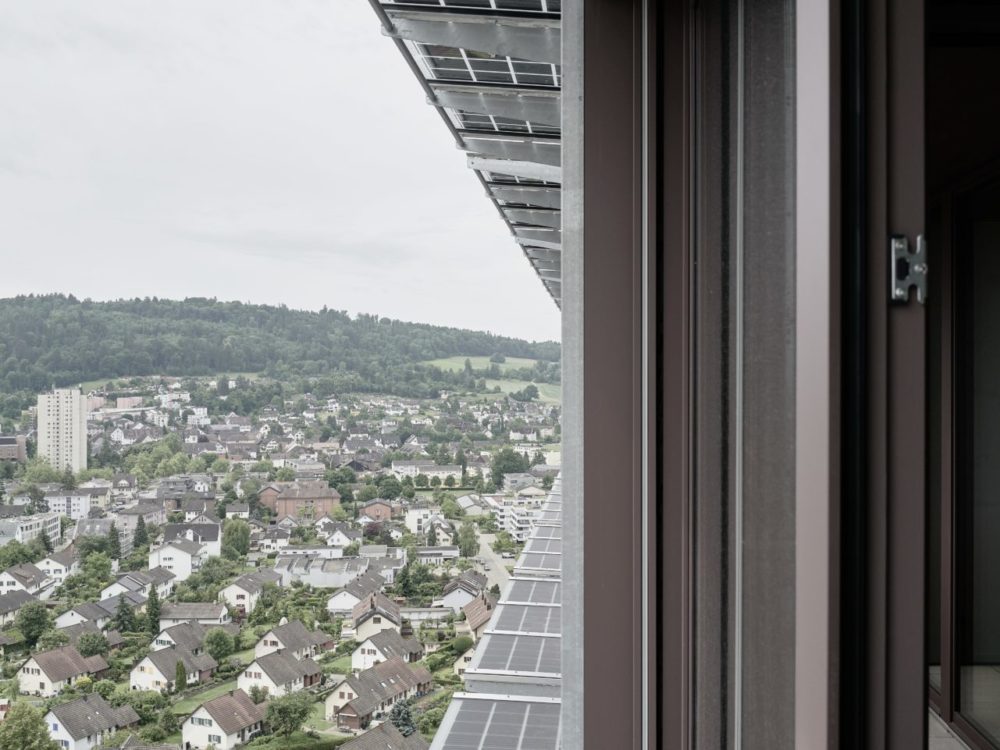
Integrated into the parapet cladding, photovoltaic modules generate electricity while shading the façade. Together with the large PV array on the roof, they produce up to 130.000 kWh per year, meeting around half of the apartments’ electricity demand.
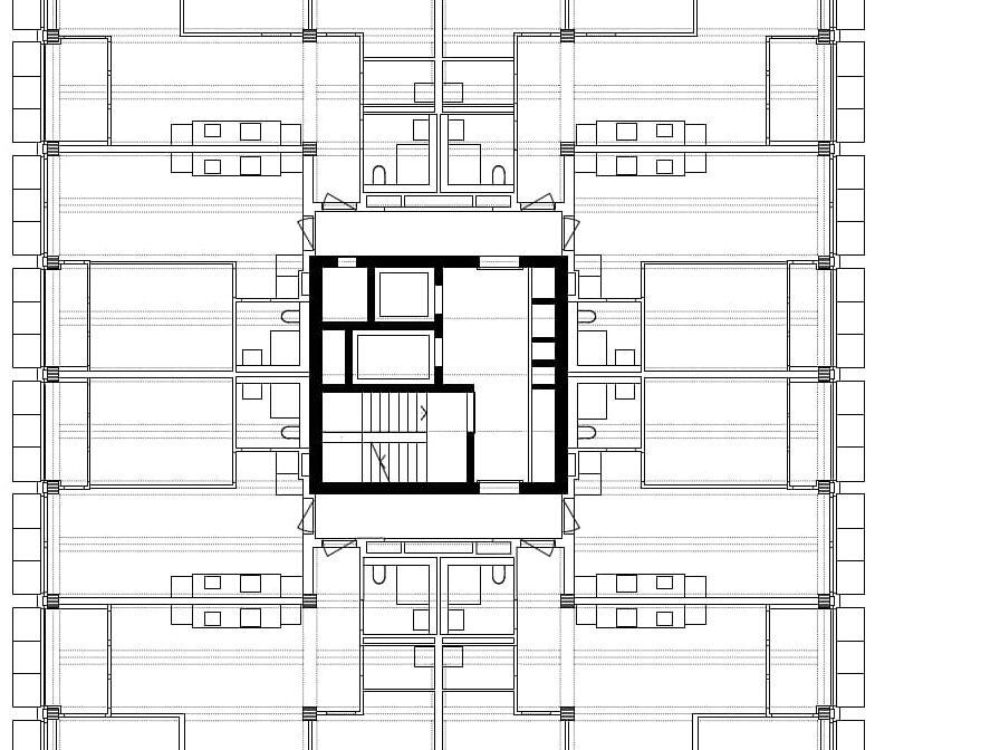
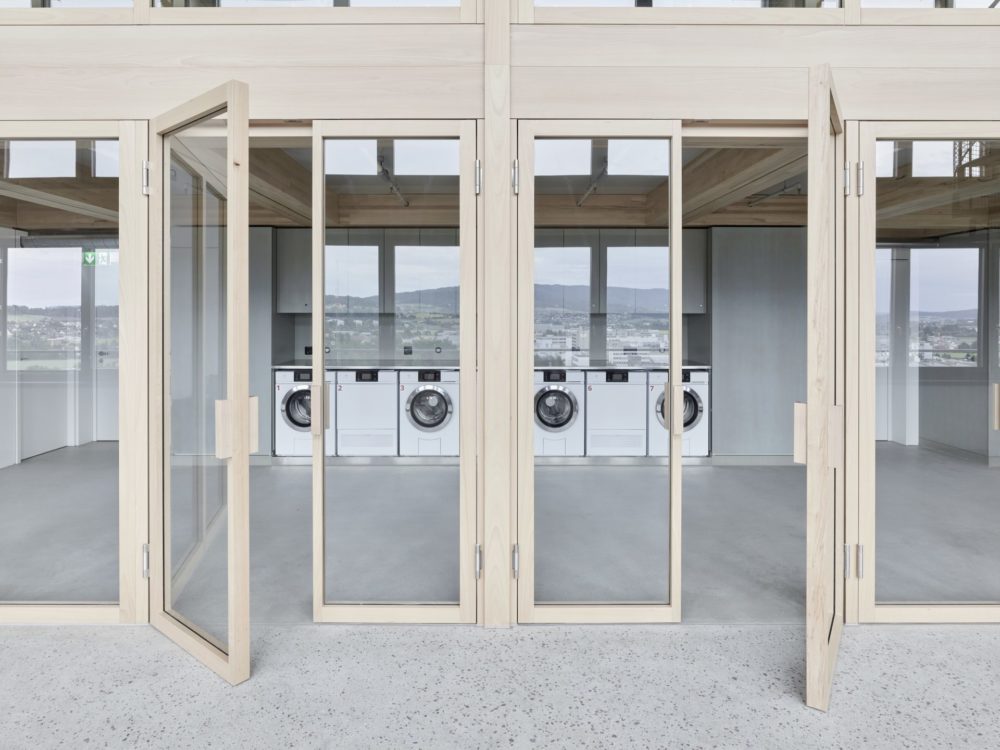
The residential floors host six to eight modular apartments per level, organised around a central core. Corner units benefit from dual orientation and generous daylight, while the modular timber construction allows flexibility in both the horizontal and vertical configuration of dwellings. The result is a sustainable, adaptable, and structurally expressive high-rise that redefines urban living in Regensdorf’s Zwhatt district.
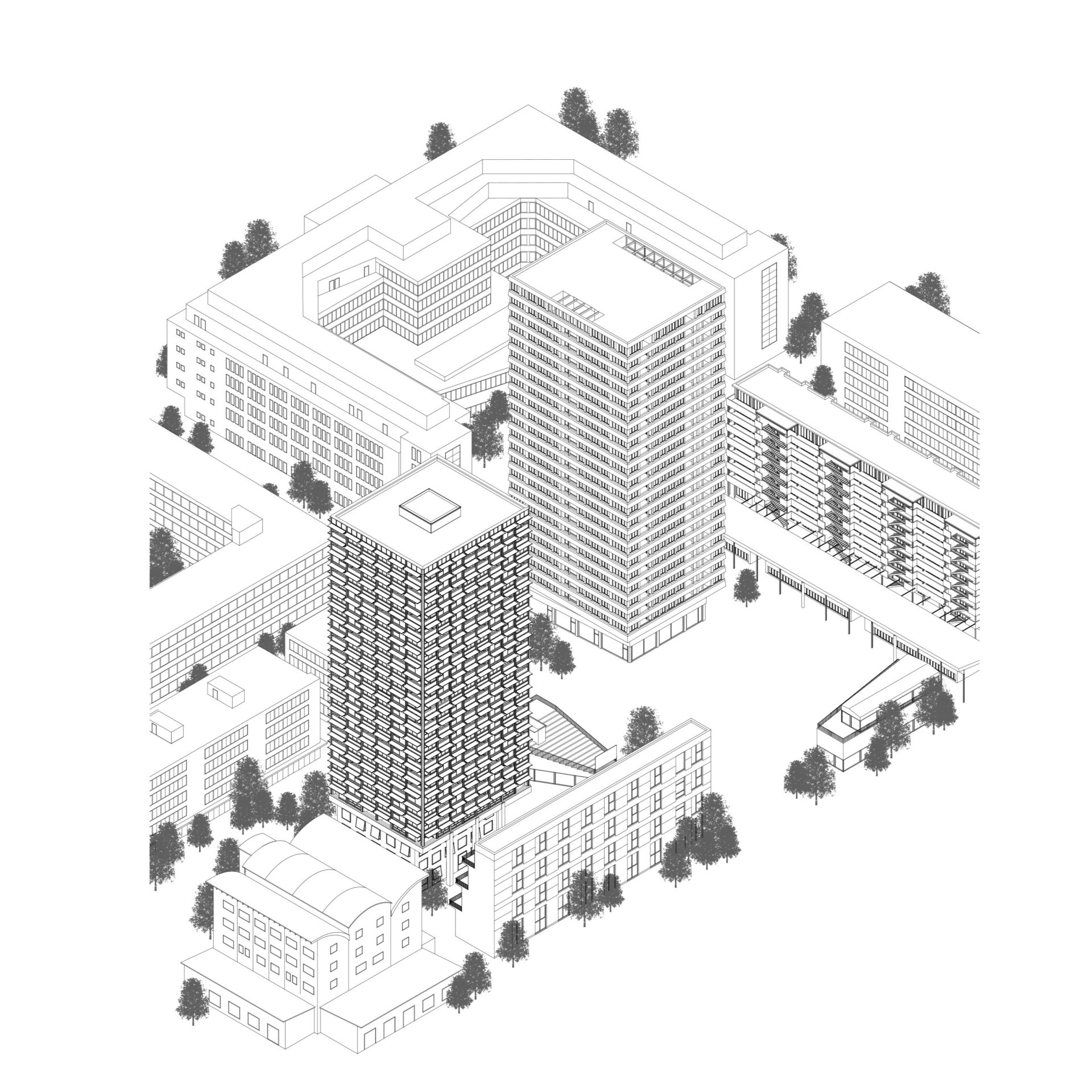
The Zwhatt district in Regensdorf, developed on the former Gretag industrial site, is one of the largest urban transformations in the canton of Zurich. The area has been converted into a mixed-use, climate-neutral urban district with affordable housing, commercial, and service spaces. In the long term, Zwhatt will unite Regensdorf’s three existing neighbourhoods into a coherent medium-sized town. Source: Boltshauser Architekten AG.
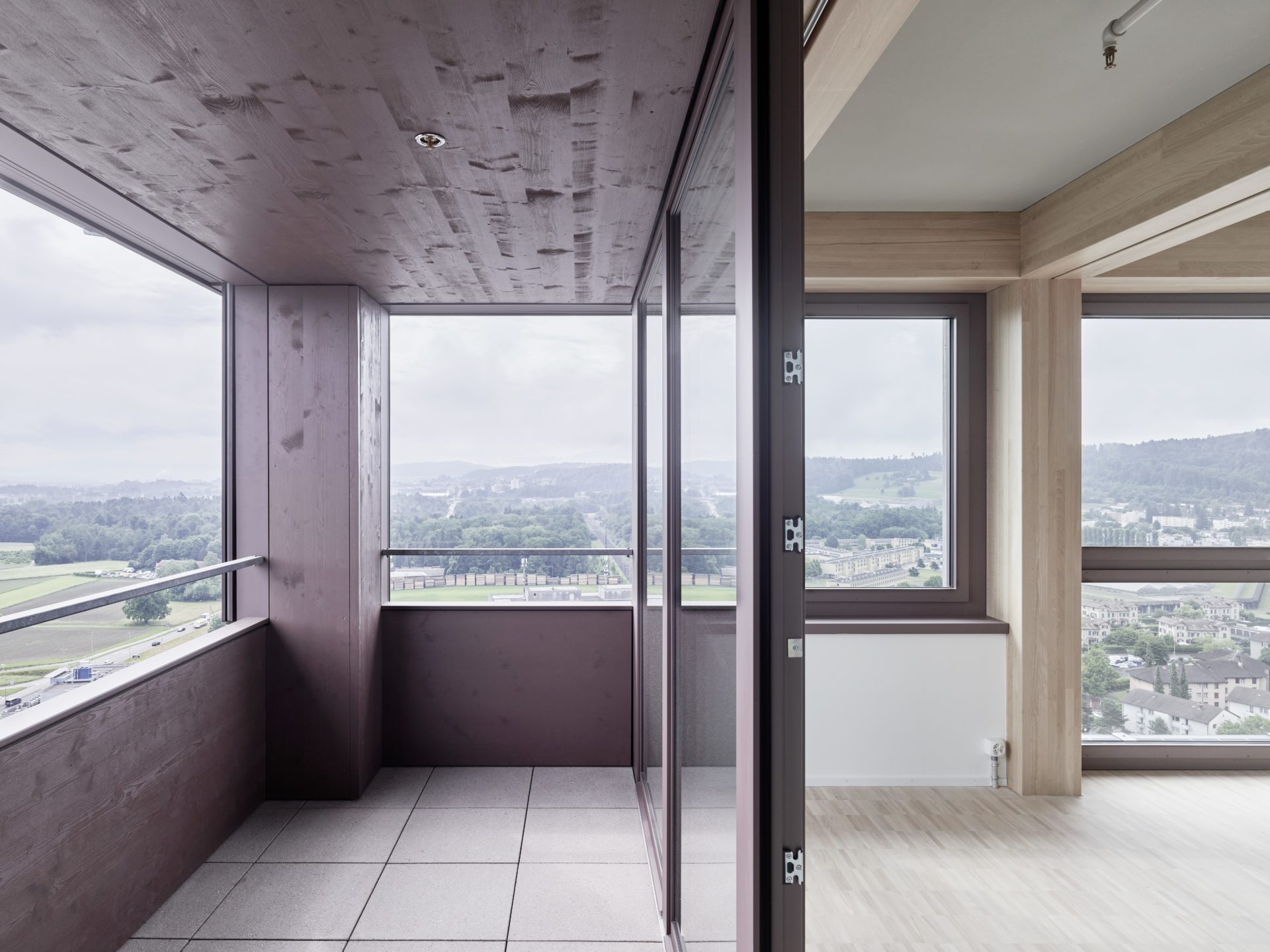
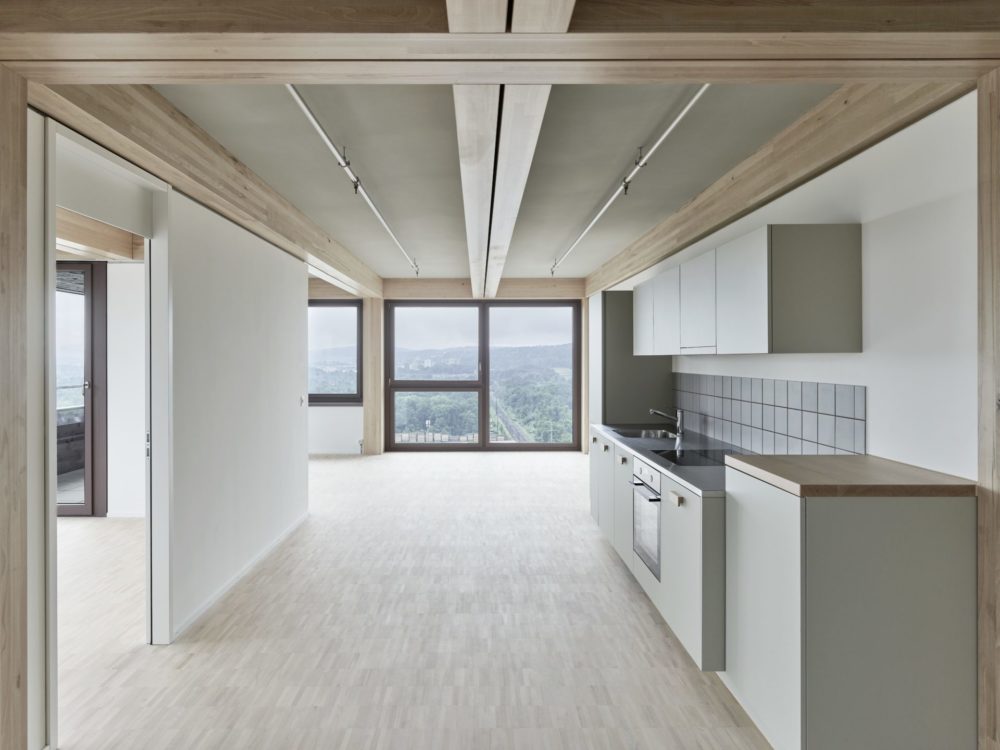
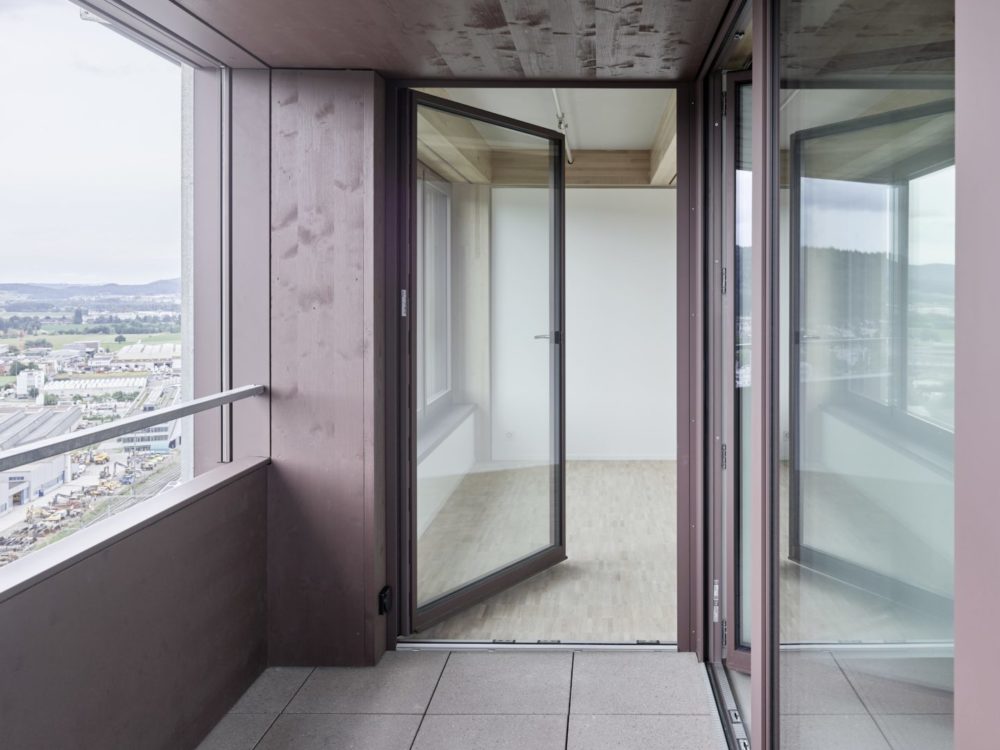
Externally, the building takes on a red shade that dialogues with Studio Märkli’s neighbouring tower, whereas the interiors are defined by natural, understated tones. © Kuster Frey.
The PV elements act also as shading devices (brise-soleil), reducing interior overheating while allowing for daylight and views. Source: Ruch AG.
 |
 |
|
| Active solar surface | 242 m² | 1’485 m² |
| Active solar surface ratio | abt. 35% | abt. 22% |
| Nominal power | 54 kWp | 188 kWp |
| Building skin application | Flat roof | Brise soleil |
70% over the building itself, 100% over Areal ZEV (0% net feed-in)
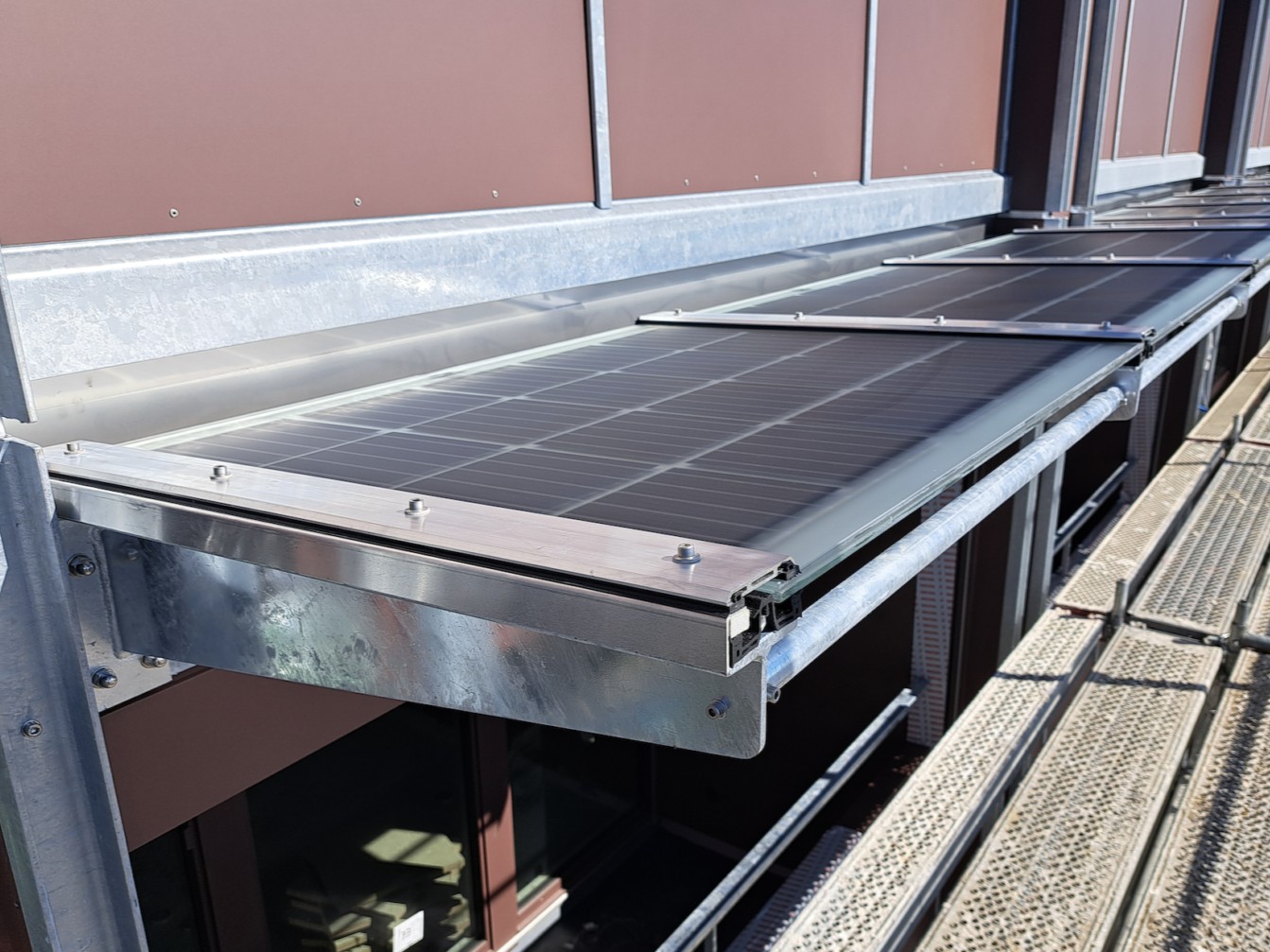
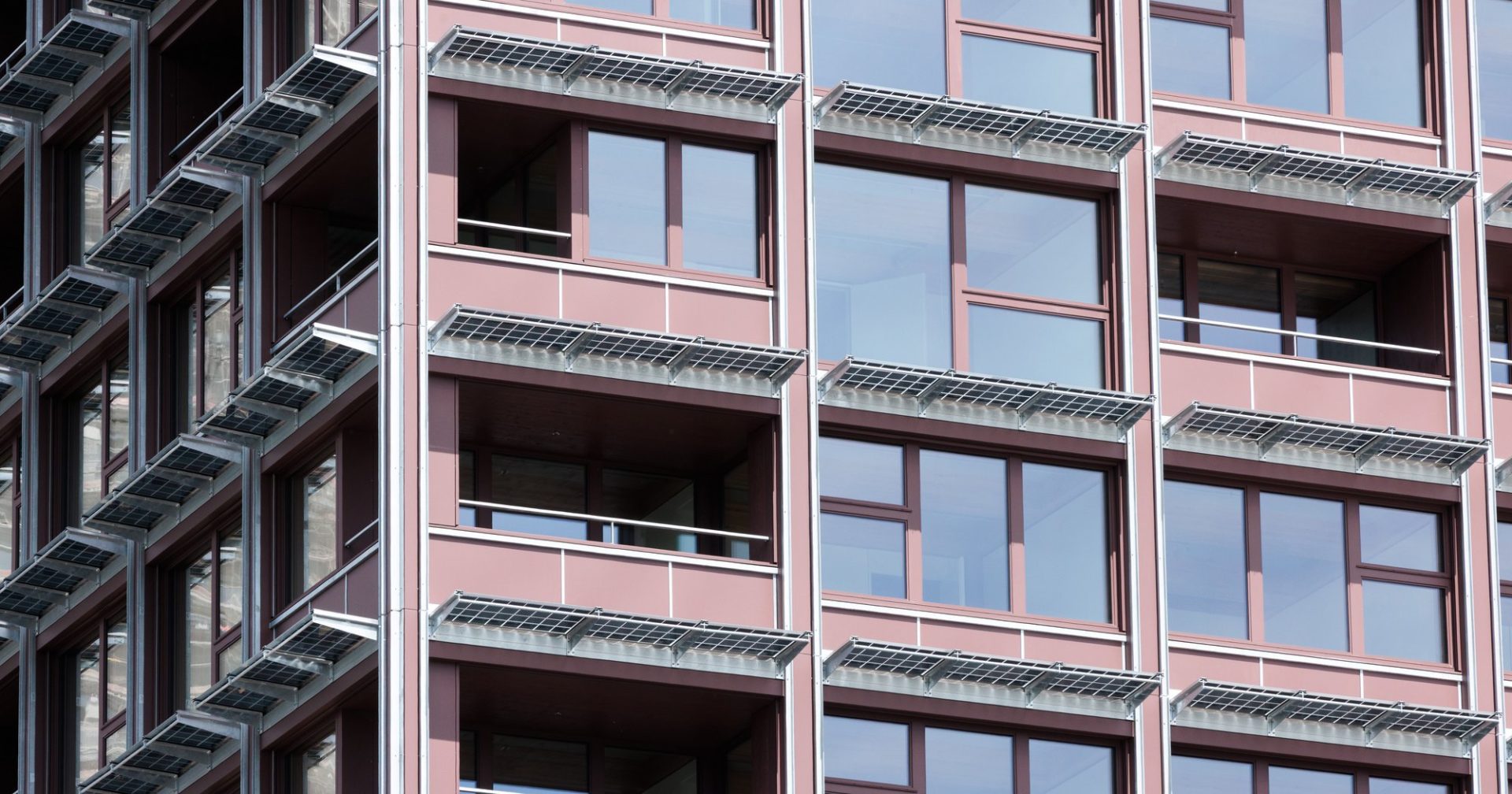
Facade elements in aluminium and steel combine precision fabrication with photovoltaic brise-soleil that generate power while shading the interiors. Source: Ruch AG.
The high-rise is conceived as a hybrid timber–concrete structure that combines material efficiency with a reduced environmental footprint. The stair and lift core, basement, and floor slabs are constructed in reinforced concrete, providing stiffness, fire resistance, and acoustic separation. The load-bearing columns and downstand beams, together with the façade elements, are made of prefabricated timber components, ensuring rapid on-site assembly and a high degree of precision.
Compared to a conventional solid structure, the hybrid system achieves a CO₂ reduction of approximately 20%equiva – lent to around 670 tons over a 60-year life cycle.
The facades are designed as a ventilated, prefabricated timber-frame system. The exterior is clad in galvanized, folded steel sheets fixed to a ventilated substructure. Behind the wind barrier and gypsum fibre sheathing, a timber stud framework filled with mineral insulation provides the main thermal protection. An inner gypsum fibre board completes the build-up, offering fire resistance and dimensional stability.
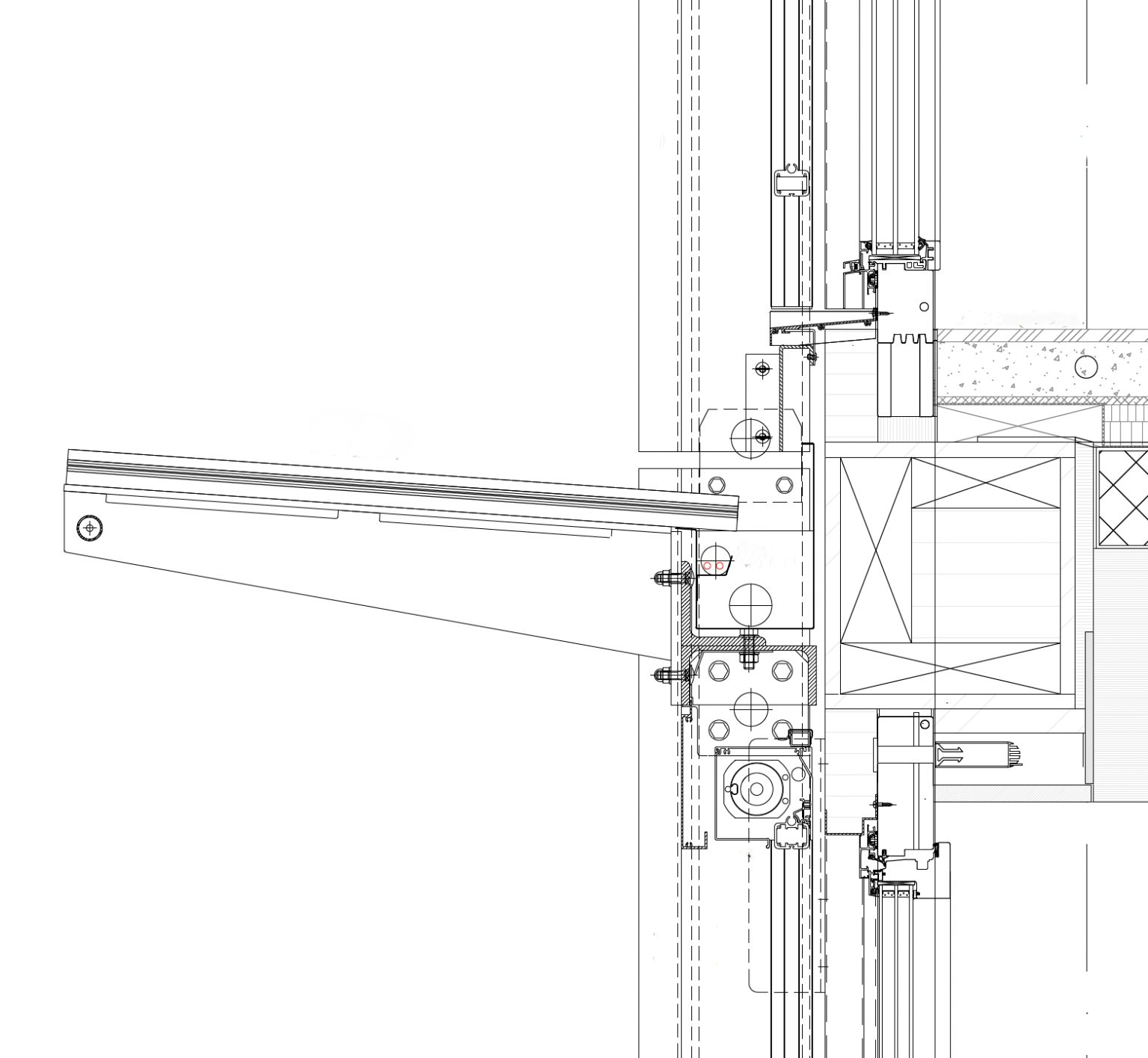
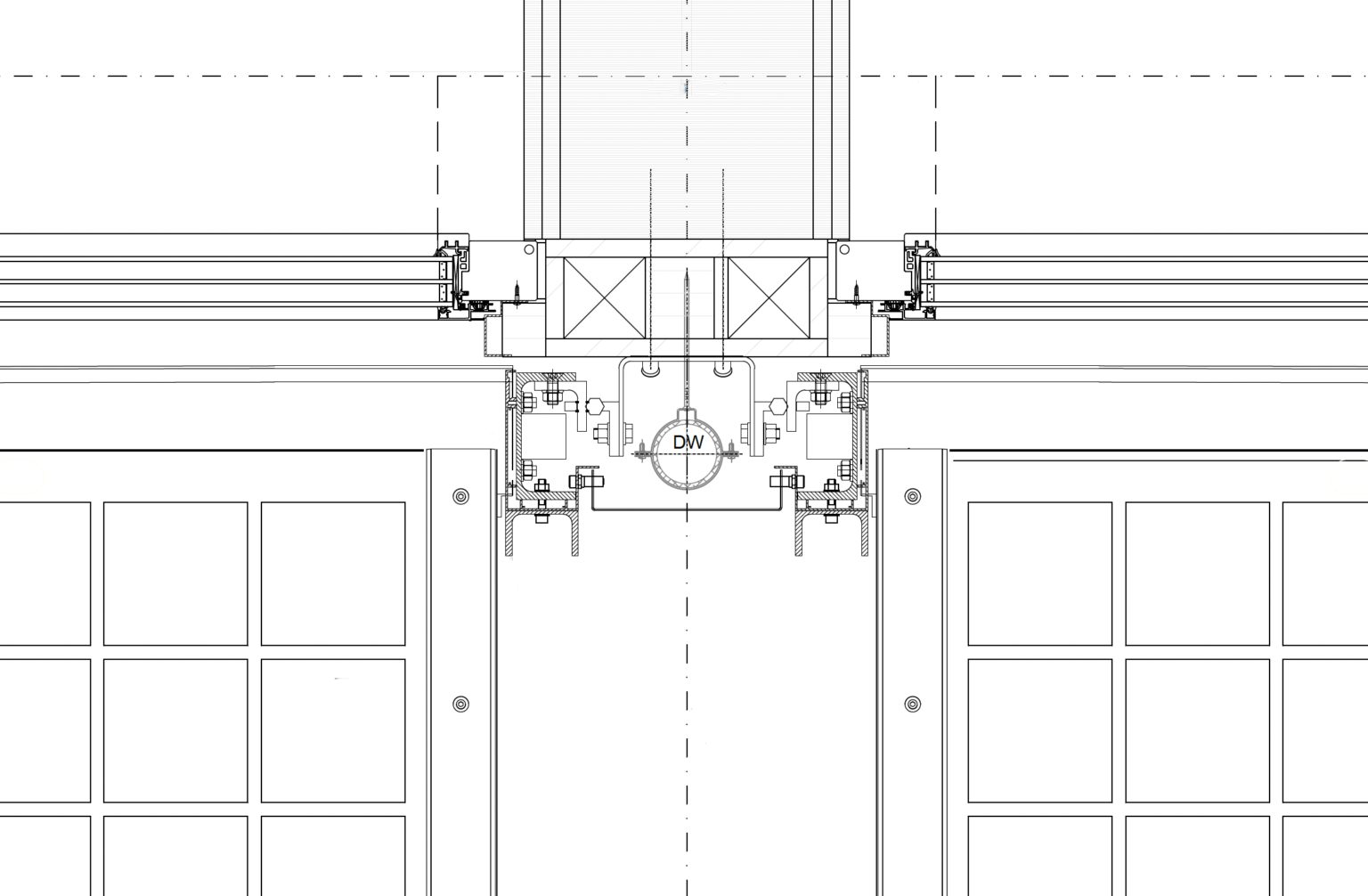
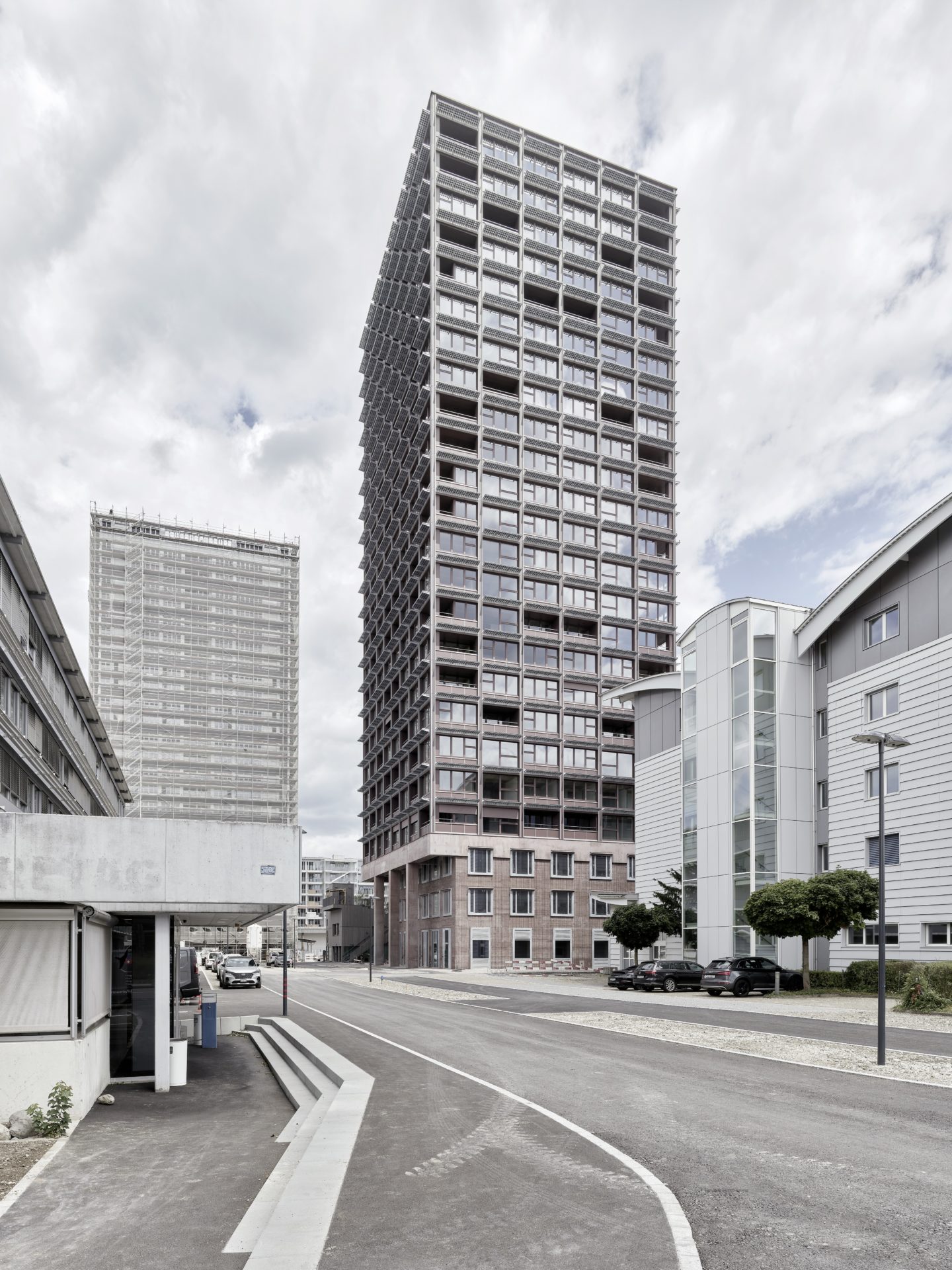
Often referred to as Redwood, the tower takes its name from the warm reddish tone of its metal facade, which recalls the colour of natural redwood timber. The architect drew inspiration from the majestic North American sequoias for both the material expression and the structural concept. © Kuster Frey.
CREDITS
Photos: Kuster Frey. All rights reserved ©. Images may not be copied or reproduced in any form without express authorization | Technical drawings: Boltshauser Architekten AG.